
Insights from ISPOR Europe 2025
Authored by: Cecile Remuzat, Craig Keenan, Claire Leboucher, Valeria Toledo, Chloë Hardern
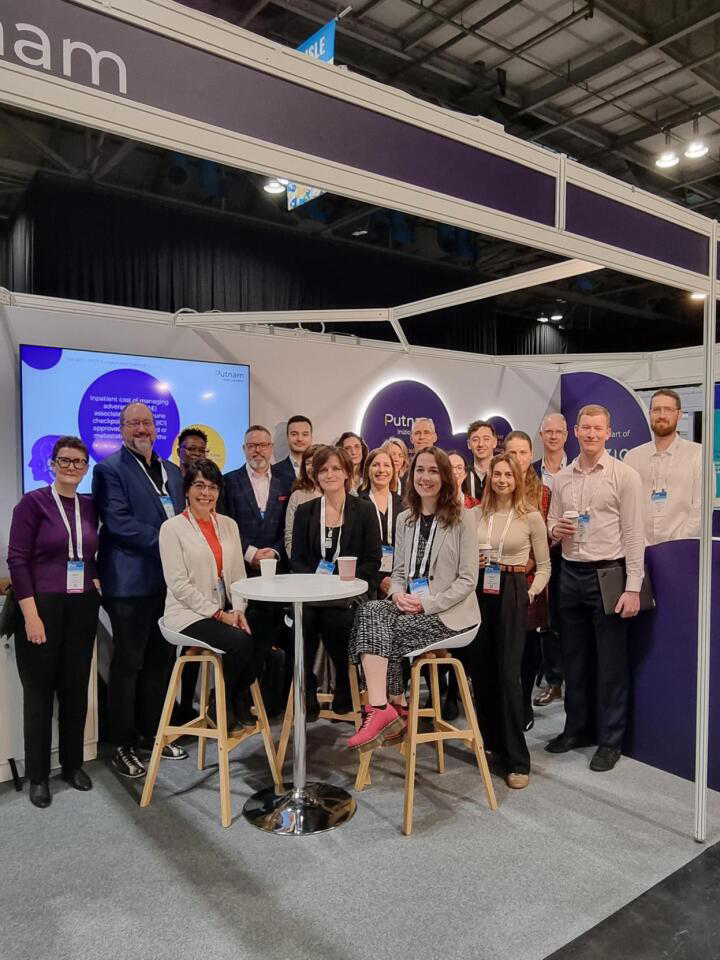
With thousands of health economics and outcomes research (HEOR) professionals gathered in Glasgow, the International Society for Pharmacoeconomics and Outcomes Research (ISPOR) Europe Conference 2025 highlighted the rapid evolution of value assessment and the growing need for patient-centered, transparent, and data-driven evidence. For the Putnam team, attending ISPOR offered an opportunity to reconnect with peers and reflect on how the field is shifting.
Below are some of the key learnings that stood out for us:
RWE & Biostatistics
Evidence Generation and Methodological Rigor
At ISPOR, methodological innovation took center stage, offering fresh perspectives on how Real-World Evidence (RWE) and biostatistics can help shape the evolving landscape of health technology assessment (HTA) and the still-new Joint Clinical Assessment (JCA) process in Europe. As the implementation of JCA progresses, discussions highlighted the growing importance of methodological transparency and consistency to ensure credible, comparable evidence across countries.
From Transportability to Global Readiness
Transportability analyses emerged as a practical bridge between local and international evidence needs. While no formal regulatory framework yet exists, speakers emphasized the importance of showing how results from one population can apply across geographies, particularly for JCA submissions. Building transportability early into study design could soon be viewed as best practice for pan-European dossiers.
External Comparators as Credibility Enablers
The use of external comparators to strengthen single-arm trials or RWE submissions continues to expand. Speakers highlighted structured approaches as essential for maintaining rigor and transparency. Standardizing these methods can accelerate acceptance by HTA bodies and increase confidence in non-randomized evidence.
Speaking a Common Language of Value
Discussions on estimands highlighted the importance of aligning statistical analyses with economic models. Inconsistent effect measures can lead to misinterpretation of treatment benefit or cost-effectiveness. Embedding estimand principles throughout analysis and modeling ensures methodological coherence and clearer communication of value.
Across sessions, ISPOR Europe 2025 signaled a shift from methodological aspiration to operational expectation. For evidence teams, rigor alone is no longer sufficient. Credibility now depends on demonstrating reproducibility, transparency, and strategic alignment across every step of the evidence lifecycle.
HTA & Market Access
ISPOR 2025 highlighted how quickly the market access landscape is shifting, and how collaboration, innovation, and agility are now essential for success. The meeting reinforced that the future of market access will be driven by AI-supported evidence generation, proactive PICO (Population, Intervention, Comparator, Outcome) anticipation, and strategic JCA planning, alongside deeper partnerships between regulators, HTA organizations, patient groups, and industry.
AI-supported Evidence Generation
A dominant theme across the conference was that AI is no longer emerging; it is already embedded in HEOR and market access workflows. Sessions ranged from practical tutorials on prompt engineering to early experiences integrating generative AI into evidence synthesis, systematic reviews, and payer communication. The message was clear: AI is transforming how we work today and how we will work tomorrow. Yet this progress remains fundamentally human-powered, and we must ensure expertise, judgment, and collaboration continue to guide how AI supports evidence generation and access strategy.
EU HTA Implementation and Preliminary Insights
The EU Joint Clinical Assessment (JCA) featured prominently across panels, workshops, and posters. Insights at ISPOR, especially from PICO simulation exercises, highlighted the scale and complexity of the transition ahead. Analyses presented suggested that products may face around 10+ PICOs on average, often accompanied by multiple subpopulations and extensive indirect comparison requirements. This level of analytical burden reinforces the need for early planning, proactive PICO forecasting, and strong cross-functional coordination well before regulatory submission. Sessions exploring access equity, patient involvement, and national readiness highlighted persistent variability across Member States in how JCA outputs may be interpreted and applied. Discussions also addressed methodological alignment, compressed timelines, and the need for strong organizational preparedness, reinforcing that JCA will shape evidence generation, internal ways of working, stakeholder engagement, and ultimately the sequencing and equity of patient access across Europe.
Integration of Environmental Impacts in HTA
Environmental sustainability was again highlighted as an important dimension in the future of health technology assessment. Several presentations emphasized the need to complement traditional economic models with measures such as CO₂ emissions, hospital waste, or the social cost of carbon. While a few HTA bodies have begun to explore these aspects, approaches remain inconsistent, and environmental evidence is still rarely used in formal evaluations. The discussions this year reinforced the need for shared methods and stronger data so that environmental impact can genuinely inform healthcare decision-making alongside clinical and economic outcomes.
PRO & Patient Preference Studies
Patient-Centered Evidence Moves to the Forefront
This year’s ISPOR made one thing unmistakably clear: patient-centered evidence is no longer optional. It is becoming a core expectation across regulators, HTA bodies, and payers as systems look beyond traditional clinical endpoints toward outcomes that reflect what truly matters to patients.
Evolving Use of PROs in Decision-Making
A key insight from the conference was the rapid shift in how Patient Reported Outcomes (PROs) are used. Regulators continue to support their inclusion, and HTA bodies are showing growing (although uneven) interest in evidence that goes beyond survival or clinician assessments. Many discussions stressed that generic instruments often fail to capture impacts patients find meaningful, highlighting the need for more sensitive tools grounded in lived experience.
Earlier Integration of Patient Preferences and PROs
Another major theme was the expectation that PROs and preference studies must be integrated early. Panelists emphasized that these measures can no longer be added late in Phase III but should be planned during early disease-area strategy, so trial endpoints reflect symptoms, functioning and burden. This shift is critical across rare diseases and chronic conditions, where survival metrics alone cannot capture the full burden on patients.
Need for Clearer Methods and Shared Language
Speakers also highlighted the need for stronger methodological alignment. Without shared terminology and clear guidance, even high-quality patient data may fail to influence HTA outcomes. The European Medicines Agency’s draft reflection paper signals a move toward more formal definitions of patient experience data but also raises questions about which types of evidence will qualify as patient-generated data. Qualitative research, repeatedly described as essential yet underused, offers context that quantitative tools often miss, but still lacks clear methodological standards for HTA.
Looking Ahead
HTA bodies need more consistent frameworks for recognizing patient-centered evidence, and companies must keep generating robust patient data until its routine use becomes the accepted norm.
Health Economic Modeling
Broader Value Elements and Expanding Model Scope Beyond Traditional Cost-Effectiveness Analysis
ISPOR highlighted growing interest in harnessing value elements (productivity, equity, disease transmission, caregiver burden, and societal outcomes) into models. Examples included frameworks that go beyond Quality-Adjusted Life Years (QALYs) to capture value related to prevention, aging, antimicrobial resistance, and distributional cost-effectiveness analysis (DCEA). This may shift modeling outcomes toward more holistic, policy-relevant analyses, requiring methods and data sources beyond standard HTA guidelines.
AI Solutions Beyond ChatGPT
AI is increasingly used to enhance modeling rigor and efficiency. Emerging tools help automate elements of evidence identification and updates, input generation, quality assurance, and multi-country reporting, helping manage growing analytical complexity. A consistent message emerged: meaningful integration depends on human validation, ensuring AI reinforces methodological quality and transparency, while providing more space for human-driven expert insights.
Recognition of Fundamental and Evolving Purpose of Modelling
Interest continues to grow in building HTA models that work across indications and countries, with ease of country-specific adaptations. Sessions discussed the need for value drivers, scenario-based pricing, and evidence-gap identification. Speakers reinforced the requirement for up-to-date country-specific HTA requirements and scalable, adaptable model structures that evolve as new requirements and data emerge. They also underlined the benefits of modeling earlier in the drug development journey.
Focus on Visuals, User Interface, and User Experience of Modelling Tools
Speakers emphasized the importance of more intuitive, visually engaging model outputs, including dashboards, executive summaries, and simplified front-end interfaces. They also pointed to opportunities for interactive calculators, visual summaries of uncertainty, and simplified summaries for internal communication. Modeling teams will need to pair technical rigor with flexible design capability and ensure findings are accessible to non-technical decision-makers.
Focus on Quality Assurance
Speakers emphasized the importance of robust validation processes, code review, structured quality control (QC), stress-testing, and clear audit trails. An interest was noted in training to support internal teams’ check model credibility, highlighting QC as fundamental prior to dissemination.
Conclusions
Overall, ISPOR Europe 2025 showed that expectations are rising across all areas: methods, evidence, AI, patient insights, and environmental impact. Early preparation and coordinated, high-quality evidence generation will be essential going forward.
Want to explore how these trends impact your market access strategy? Contact our HEOR experts to learn more or book a consultation.
Jump to a slide with the slide dots.
Launch Command Centers Predict Pharma Launch Risk with Agentic AI
Agentic AI–powered launch command centers predict pharma launch risks and enable faster, smarter decisions for successful product launches.
Read moreUnpacking $100B+ Obesity Market Opportunity: What It Means for Biopharma, Payers, and Providers
As obesity care surges past $100B, biopharma, payers, and providers face a new era of opportunity.
Read moreESMO 2025 Insights: Emerging oncology trends highlighting the need for Precision Medical Affairs
At ESMO 2025, science set the pace, but Precision Medical Affairs defined the path, turning complexity into clarity and innovation into impact.
Read more